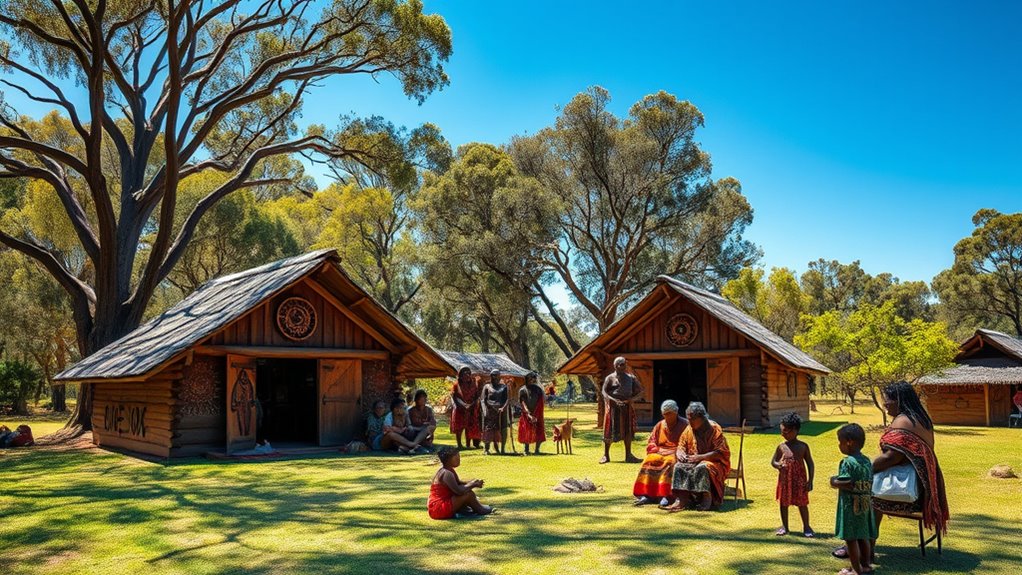

Koori communities of Victoria have a rich history rooted in their land, stories, and art that pass down cultural knowledge through generations. Today, they actively work to preserve their language, traditions, and identity amid contemporary life challenges. Art, storytelling, and language initiatives strengthen community bonds and celebrate their cultural pride. By understanding their ongoing efforts, you’ll discover how Koori communities keep their heritage alive and vibrant for future generations.
Key Takeaways
- Koori communities in Victoria have a rich history rooted in land connection, cultural traditions, and storytelling through art.
- Indigenous art forms like bark paintings and carvings serve as cultural records and reinforce identity.
- Efforts to revitalize Koori languages involve community classes, storytelling, and intergenerational knowledge sharing.
- Art and language initiatives strengthen community bonds, pride, and cultural resilience amid historical hardships.
- Contemporary Koori life includes cultural events, community-led projects, and ongoing practices that preserve traditions.
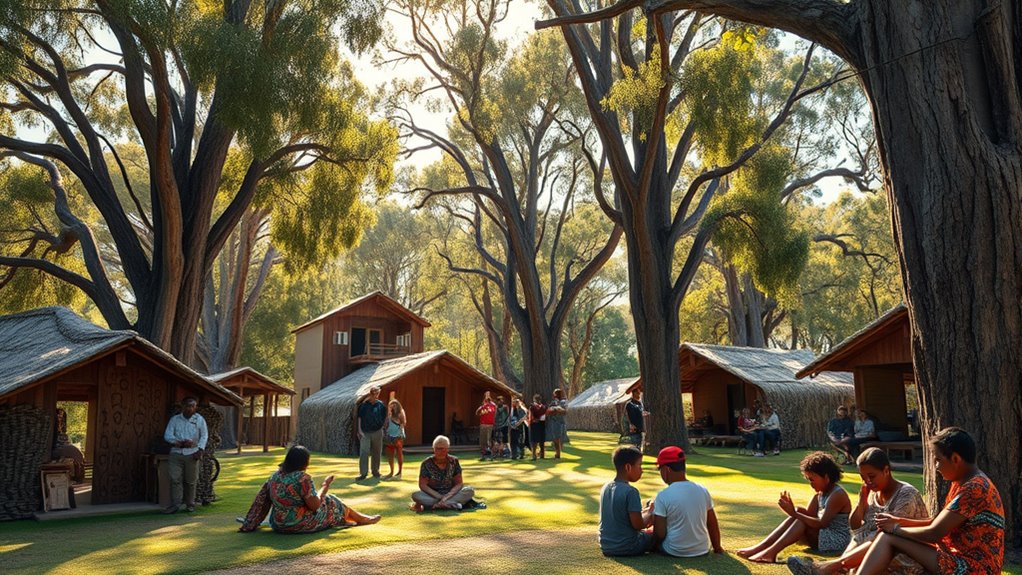
Have you ever wondered how Koori communities in Victoria maintain their rich cultural traditions and strong social bonds? One of the key ways they do this is through the vibrant expression of Indigenous art. Koori art isn’t just about creating beautiful designs; it’s a living record of their history, stories, and connection to the land. You might see intricate bark paintings, carved weapons, or woven objects that carry deep meanings passed down through generations. These artworks serve as a bridge between the past and present, helping community members stay connected to their ancestors’ wisdom. When you witness Koori art, you’re witnessing more than just craft—you’re experiencing a essential part of their cultural identity. It’s a powerful means of storytelling that reinforces their sense of belonging and pride. Additionally, the use of traditional materials and techniques in art helps preserve artistic traditions, ensuring their continuity over time.
Alongside visual art, language preservation plays a critical role in maintaining cultural integrity. The Koori languages, part of the broader Aboriginal language family, faced decline due to colonization and historical policies that suppressed Indigenous languages. Today, communities actively work to revitalize and preserve their languages, recognizing their importance as a foundation of cultural identity. Efforts include language classes, community events, and incorporating language into daily activities. You might find local schools teaching Koori words and phrases or community gatherings where elders share stories in their ancestral tongue. These initiatives help younger generations reconnect with their linguistic roots, ensuring that their language continues to thrive. Language preservation isn’t just about speaking words; it’s about keeping alive a way of understanding the world that’s unique to Koori people.
Both Indigenous art and language preservation serve as fundamental tools in strengthening community bonds. They allow Koori people to assert their cultural sovereignty and resist assimilation pressures. You can see this in community-led art projects that celebrate Koori identity or language programs that involve elders passing down knowledge. These practices foster pride, resilience, and a sense of continuity. By engaging in these cultural expressions, community members reaffirm their connection to their ancestors and each other, reinforcing social bonds that have persisted despite centuries of hardship. Whether through creating a new painting, learning a traditional word, or sharing stories in their language, Koori communities actively nurture their cultural heritage. This ongoing effort ensures that their rich traditions remain alive for future generations to cherish and pass on.

Australian Aboriginal Paintings
- Condition: Used Book in Good Condition
As an affiliate, we earn on qualifying purchases.
As an affiliate, we earn on qualifying purchases.
Frequently Asked Questions
How Do Koori Communities Preserve Their Traditional Languages Today?
You can see how Koori communities preserve their traditional languages today through language revival efforts and cultural workshops. They actively teach younger generations, creating programs that focus on speaking and understanding their native languages. These workshops help reconnect community members with their heritage, ensuring the language stays alive. By participating in these initiatives, you support the ongoing preservation and celebration of Koori culture and language.
What Are the Main Challenges Facing Koori Youth in Victoria?
Imagine a young Koori person standing at a crossroads, unsure which path leads to hope. You face challenges like mental health issues and limited employment opportunities, which can feel overwhelming. These obstacles threaten your future and cultural connection. You need support, community programs, and opportunities that recognize your strength. Overcoming these barriers empowers you to thrive, preserving your identity while building a future full of promise and resilience.
How Does Government Policy Impact Koori Land Rights Currently?
You see that government policy markedly impacts Koori land rights today. Policy reforms aim to recognize land sovereignty, but progress is slow and often limited. These reforms can either strengthen Koori communities’ control over their land or restrict their rights through bureaucratic hurdles. Your awareness of these policies helps you understand the ongoing struggle for land justice and the importance of supporting efforts that prioritize Koori sovereignty and cultural preservation.
What Role Do Koori Elders Play in Community Decision-Making?
You might not realize it, but Koori elders play a crucial role in community decision-making. Through elder mentorship and leadership influence, they guide important choices, uphold cultural traditions, and support younger generations. Their wisdom fosters unity and guarantees community values are respected. When you see Koori elders actively involved, you’re witnessing the backbone of community resilience and the preservation of cultural identity for future generations.
How Are Koori Cultural Practices Integrated Into Local Education Systems?
You see Koori cultural practices integrated into local education by including Indigenous art and hosting cultural festivals. Schools actively incorporate Indigenous art projects to teach students about Koori heritage, fostering respect and understanding. They also organize cultural festivals that celebrate Koori traditions, allowing students and communities to engage directly with Koori culture. This approach helps preserve traditions and promotes cultural awareness within the education system.
Conclusion
So, after learning about the rich history and resilient spirit of Koori communities in Victoria, you might think progress is steady. But isn’t it ironic that, despite their vibrant culture and ongoing efforts, many face ongoing challenges and systemic barriers? It’s a reminder that true respect and recognition require more than just stories—they demand action. Keep listening, learning, and standing with these communities, because change isn’t just history; it’s happening right now.