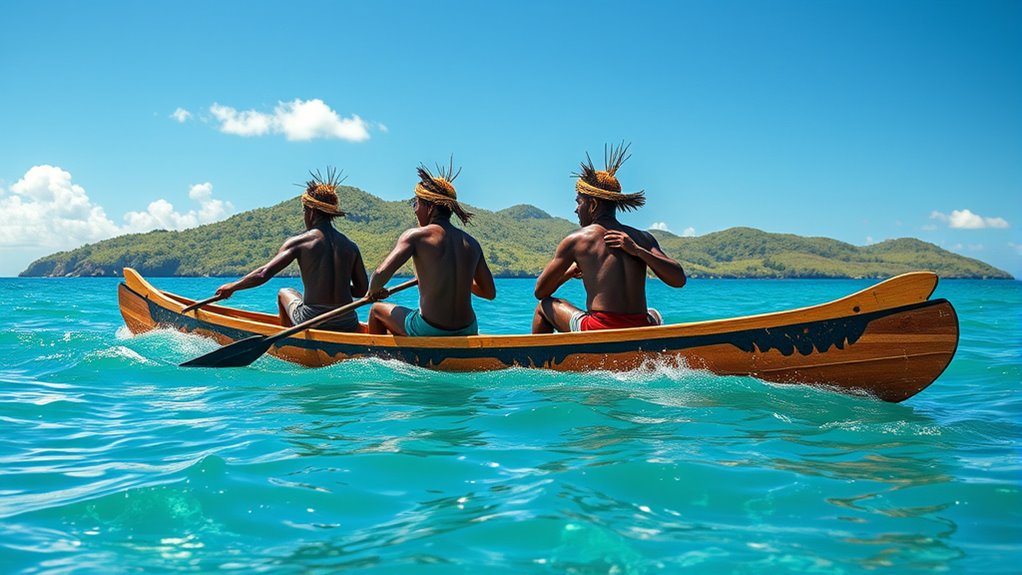

As a Torres Strait Islander, you have a deep spiritual and cultural bond with your sea country, using traditional navigation skills passed down through generations. Your community’s knowledge helps you sustainably manage fishing zones and protect coral reefs, ensuring the health of marine ecosystems. This connection shapes your identity and spiritual beliefs, making the ocean essential to your daily life. Explore further to learn more about how your ancestors’ wisdom continues to guide your relationship with the sea.
Key Takeaways
- Torres Strait Islanders possess extensive traditional navigation skills passed down through generations.
- Their deep cultural connection to sea country shapes their identity and spiritual beliefs.
- They actively manage fishing zones and protect coral reefs to sustain marine ecosystems.
- Navigational expertise enables them to traverse and connect scattered islands and reefs.
- Protecting marine biodiversity is vital to preserving their cultural heritage and spiritual practices.
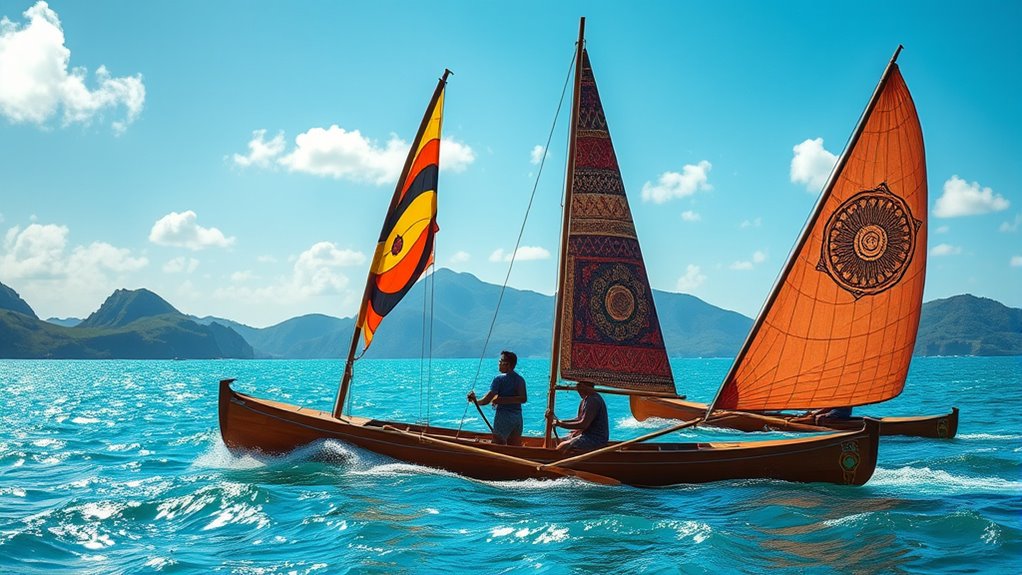
The Torres Strait Islanders are a distinct Indigenous group native to the islands between northern Queensland and Papua New Guinea. As someone interested in their rich culture and way of life, you should recognize how deeply connected they are to their sea country. Their existence revolves around the ocean, which provides not only sustenance but also shapes their cultural heritage. You can see this reflected in their traditional practices, stories, and navigation skills. Because their land is made up of scattered islands and reefs, they’ve developed an extraordinary knowledge of marine environments, making them expert navigators of complex sea routes. This expertise is essential for their survival and is passed down through generations, demonstrating their traditional navigation skills.
The Torres Strait Islanders’ culture is deeply rooted in their ocean environment and navigational expertise.
You might not realize how essential marine conservation is to the Torres Strait Islanders. They see the ocean as a living entity, integral to their spiritual beliefs and daily survival. Protecting marine biodiversity isn’t just about preserving fish or coral; it’s about safeguarding their cultural identity. You can understand that their cultural heritage is woven into the very fabric of their relationship with the sea. Their stories, dances, and ceremonies often tell of their ancestors’ journeys across these waters, emphasizing their sacred connection to sea country. This relationship is a cornerstone of their community, influencing how they fish, hunt, and interact with their environment.
Being aware of their cultural heritage also means respecting their traditional knowledge systems. These systems guide sustainable practices that have allowed them to coexist with their environment for thousands of years. When you learn about their marine conservation efforts, you’ll see that they’re not just protecting natural resources—they’re defending their cultural identity for future generations. Their practices include carefully managing fishing zones, protecting coral reefs, and maintaining the health of their marine ecosystems. These actions help ensure that their sea country remains vibrant and productive.
Understanding the Torres Strait Islanders’ perspective gives you insight into how deeply intertwined their cultural heritage is with marine conservation. It’s more than environmental stewardship; it’s a way of life that honors their ancestors and preserves their identity. By supporting their efforts, you’re helping sustain a community that has thrived in harmony with the ocean for centuries. Their navigational skills, traditional practices, and spiritual beliefs all highlight their intrinsic bond with the sea. Recognizing this connection allows you to appreciate the importance of respecting and protecting their sea country, ensuring their cultural heritage endures amidst changing times.

THINKSUP Professional Marine Sextant Navigation Instrument with Telescope Black Metal Finish Nautical Measuring Tool for Maritime Study Ship Decor Gift
PROFESSIONAL NAVIGATION: Marine sextant with precision telescope for accurate celestial navigation and maritime positioning measurements
As an affiliate, we earn on qualifying purchases.
As an affiliate, we earn on qualifying purchases.
Frequently Asked Questions
How Do Torres Strait Islanders Preserve Their Maritime Traditions?
You preserve your maritime traditions through traditional storytelling, passing down stories that teach navigation and sea knowledge. You also keep art craftsmanship alive, creating intricate crafts and tools used by your ancestors. By practicing these skills and sharing them with younger generations, you guarantee your cultural heritage endures. These methods help you maintain your identity as skilled navigators and guardians of Sea Country, honoring your ancestors’ wisdom and connection to the sea.
What Specific Navigational Tools Do They Use?
Imagine steering through vast waters, guided only by the night sky. You use traditional canoes equipped with star navigation, relying on the positions of stars like the Southern Cross and specific constellations. These navigational tools, combined with deep oral knowledge passed down generations, help you traverse Sea Country confidently. The stars become your map, your compass, ensuring safe passage and preserving your rich maritime heritage.
How Has Climate Change Affected Their Sea Country?
You’ve probably noticed that climate impact, like rising sea levels, threatens your sea country. As sea levels rise, your islands face erosion, flooding, and habitat loss, making navigation and traditional practices harder. The changing climate disrupts marine ecosystems you depend on, jeopardizing your culture and livelihood. You need urgent action to protect your sea country, ensuring future generations can continue your essential navigational and cultural traditions.
What Are Their Main Cultural Ceremonies Related to Navigation?
You participate in important cultural ceremonies like Dance ceremonies that honor navigation, where you learn and pass down skills. Dreamtime stories are central, sharing the origins and spiritual significance of navigation techniques. These ceremonies connect you to your ancestors, reinforcing your identity and respect for the sea. Through dance and storytelling, you preserve your navigational knowledge, ensuring it remains alive for future generations and continues to guide your community across the sea.
How Do Torres Strait Islanders Pass Down Seafaring Knowledge?
You pass down seafaring knowledge through oral storytelling and intergenerational mentoring. Elders share stories of navigation techniques, star patterns, and sea routes, ensuring the wisdom stays alive. Younger generations learn by observing and practicing under their elders’ guidance, fostering a strong connection to Sea Country. This tradition keeps the islanders’ navigation skills vibrant, preserving their cultural heritage and ensuring safe journeys across the waters for generations to come.

Genius Games Ecosystem: Coral Reef – A Mensa Recommended Family Card Game About Aquatic Animals, Their Habitats & Food Chain | A Light Educational Marine Biology Board Game for Kids and Families
MARINE BIOLOGY GAME – Learn about underwater creatures and their habitats in this nature card game! Players use…
As an affiliate, we earn on qualifying purchases.
As an affiliate, we earn on qualifying purchases.
Conclusion
So, next time you look out at the ocean, remember that Torres Strait Islanders are true navigators of sea country. They’ve preserved their culture and connection to the sea for generations, showing resilience and respect for nature. Can you imagine losing that deep bond with the ocean? Their story reminds us to honor Indigenous knowledge and protect these essential waterways. After all, isn’t it our shared responsibility to sustain the world’s most precious seascapes?

CNZ® Artificial Coral Plant for Fish Tank Decorative Aquarium Reef Ornament (10-Piece Assorted Coral)
Made of PU,PVC and Resin,Environmental protection material
As an affiliate, we earn on qualifying purchases.
As an affiliate, we earn on qualifying purchases.

Heritage of Indian Sea Navigation (Routledge Revivals)
As an affiliate, we earn on qualifying purchases.
As an affiliate, we earn on qualifying purchases.