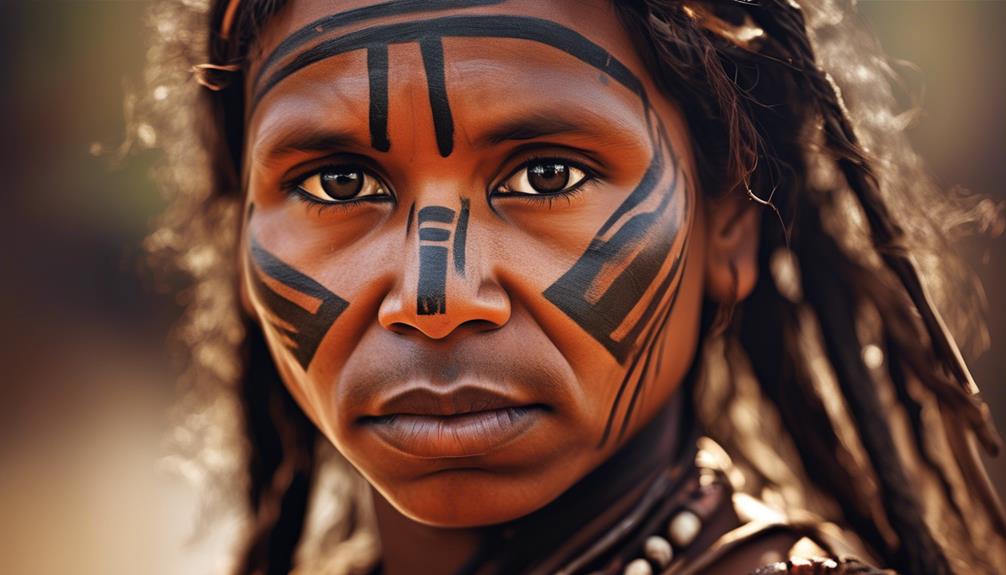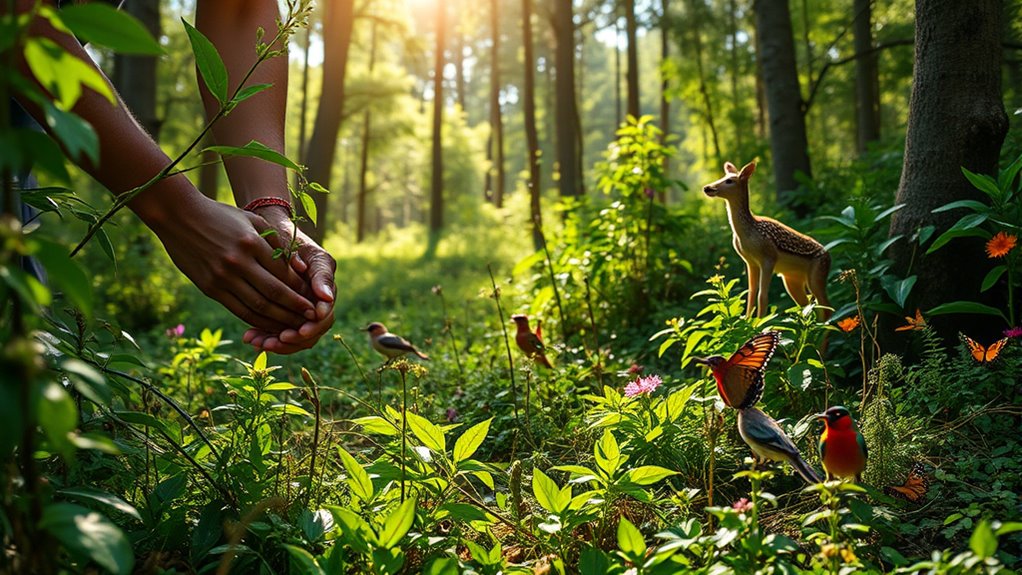

Indigenous-led rewilding projects focus on restoring native species to strengthen ecosystems and preserve cultural traditions. By reintroducing plants and animals adapted to local conditions, they boost biodiversity and ecological resilience. These efforts also honor indigenous practices and knowledge, fostering community ownership and social cohesion. Such projects create a harmonious relationship between people and nature, ensuring long-term sustainability. Keep exploring to discover how these initiatives are transforming conservation and cultural preservation.
Key Takeaways
- Indigenous-led restoration projects prioritize native species to restore ecosystems, enhance biodiversity, and promote ecological resilience.
- These initiatives incorporate traditional knowledge and cultural practices, ensuring respectful and effective conservation.
- Rewilding with native species supports ecosystem stability and helps combat environmental stresses like climate change and invasive species.
- Community engagement and Indigenous participation foster social cohesion, cultural revitalization, and shared stewardship of natural resources.
- Such projects emphasize ecological integrity alongside cultural preservation, creating sustainable relationships between people and nature.

Rewilding with native species offers a powerful way to restore ecosystems and promote biodiversity. When you focus on reintroducing native plants and animals, you’re helping to rebuild the natural balance that has often been disrupted by human activity. This approach strengthens ecosystem resilience, enabling habitats to better withstand environmental stresses like climate change, disease, and invasive species. Native species are adapted to local conditions, so their presence supports a more stable and self-sustaining environment. As a result, the ecosystems become more robust, capable of recovering from disturbances more quickly and maintaining ecological functions over time.
Rewilding with native species restores ecosystems and boosts resilience against environmental stresses.
In addition to ecological benefits, native rewilding projects often hold deep cultural significance for Indigenous communities and local populations. Many native species are intertwined with cultural practices, spiritual beliefs, and traditional knowledge. By prioritizing indigenous-led restoration projects, you respect and honor these cultural connections, fostering a sense of ownership and stewardship among community members. This approach ensures that conservation efforts align with local values and histories, creating a more meaningful and sustainable impact. When Indigenous peoples lead the way, they bring invaluable insights into native species behaviors, habitat requirements, and ecological relationships that can enhance the success of rewilding initiatives.
Furthermore, engaging Indigenous communities in these projects promotes social cohesion and empowers local populations. It recognizes their sovereignty and expertise, allowing them to shape conservation strategies that preserve both biodiversity and cultural heritage. This collaborative approach often results in more effective and enduring outcomes, as it fosters trust and shared responsibility. Rewilding with native species isn’t just about restoring ecosystems; it’s about revitalizing cultural identities and ensuring that traditional knowledge continues to thrive alongside ecological recovery.
As you participate in or support native-led rewilding projects, you’re contributing to a broader movement that values ecological integrity and cultural diversity equally. These efforts demonstrate that conservation can be a form of cultural preservation, creating a harmonious relationship between people and nature. By prioritizing native species and indigenous leadership, you’re helping to build resilient ecosystems that are rich in biodiversity and cultural history. This holistic approach not only benefits the environment but also nurtures the social fabric of communities, ensuring that the legacy of native species and traditions endures for generations to come.

The Guerrilla Gardening Field Notes & Seed Bomb Log: A Practical Journal to Plan, Mix, and Track Responsible Urban Plantings
As an affiliate, we earn on qualifying purchases.
As an affiliate, we earn on qualifying purchases.
Frequently Asked Questions
How Can Local Communities Be Involved in Rewilding Efforts?
You can get involved in rewilding efforts through community participation, helping with habitat restoration or monitoring native species. Supporting cultural preservation is also key, so you might promote traditional ecological knowledge and practices. Attend local events, volunteer with indigenous-led projects, or advocate for policies that prioritize native species. Your active involvement guarantees the community’s voice is heard, fostering sustainable ecosystems and preserving cultural heritage for future generations.
What Are the Biggest Challenges in Indigenous-Led Restoration Projects?
You’ll face significant challenges like funding hurdles, which can limit resources and project scope. Cultural considerations are equally vital, as respecting indigenous traditions and knowledge is essential for authentic restoration. Balancing these aspects requires ongoing dialogue and support from all stakeholders. Overcoming these hurdles means securing sustainable funding and fostering trust within communities, ensuring the project aligns with indigenous values and long-term ecological goals.
How Do Native Species Benefit Biodiversity Compared to Non-Native Ones?
You’ll find that native species boost biodiversity more effectively than non-natives, as they support 75% of local wildlife. Native plants strengthen ecosystem resilience by adapting to local conditions and promoting genetic diversity, which helps ecosystems recover from disturbances. Unlike non-native species, they’re more likely to create stable habitats, ensuring long-term health for the environment. Embracing native species in restoration projects truly nurtures a balanced, thriving ecosystem.
Are There Successful Case Studies of Indigenous-Led Rewilding?
Yes, there are successful indigenous-led rewilding projects that enhance ecological resilience and promote cultural preservation. For example, in Australia, Aboriginal groups restore fire regimes and native habitats, boosting biodiversity and honoring traditions. These projects empower indigenous communities, preserve their knowledge, and create healthier ecosystems. Your involvement in supporting or learning from such initiatives helps sustain both cultural heritage and ecological balance, demonstrating that indigenous leadership makes a meaningful difference.
How Is the Success of Native Species Reintroduction Measured?
You’ll find that success is often measured through ecological indicators like biodiversity, population stability, and habitat health. Long-term monitoring plays a vital role, revealing trends over years rather than months. For instance, a 30% increase in native species populations over a decade signifies effective reintroduction. These metrics help guarantee the rewilding efforts truly restore ecosystems, guiding adaptive management and confirming that native species thrive sustainably in their restored habitats.
Conclusion
By supporting indigenous-led rewilding projects, you help restore ecosystems authentically and sustainably. Some might think these efforts take too long or lack immediate results, but real change requires patience and respect for natural processes. When you back native species restoration, you’re investing in a healthier planet that benefits everyone—humans included. Your involvement fosters resilience and preserves biodiversity for future generations, proving that true progress grows from understanding, patience, and honoring indigenous knowledge.