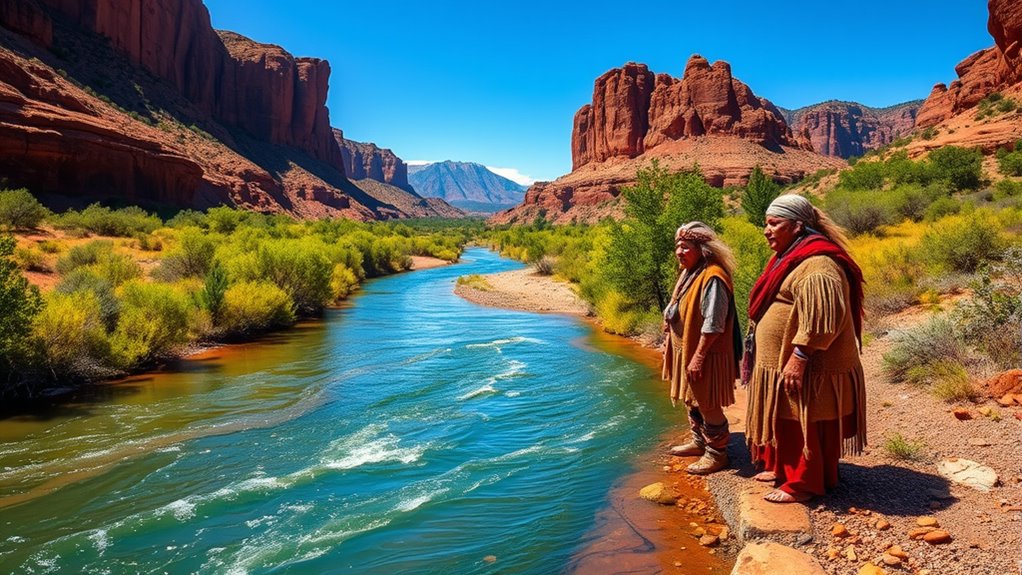

Recognizing native title transforms your ability to participate in water management, affirming Indigenous sovereignty over traditional lands and waters. It empowers communities to claim rights, influence policies, and lead projects that align with cultural values. This legal recognition fosters collaboration, promotes sustainable practices, and helps address historical injustices. If you want to understand how native title is shaping water rights and creating new opportunities for Indigenous involvement, there’s more to uncover ahead.
Key Takeaways
- Native title recognition affirms Indigenous sovereignty over traditional lands and waters, empowering communities in water management decisions.
- It provides a legal basis for Indigenous control over culturally significant water sources and resource rights.
- Recognized native title enables Indigenous-led water conservation, ecological restoration, and cultural site protection initiatives.
- Effective water rights integration requires inclusive governance, government collaboration, and respect for Indigenous perspectives.
- This legal recognition promotes sustainable, equitable water management and enhances Indigenous sovereignty for future generations.

Have you ever wondered how Indigenous communities’ native title impacts their water rights? When native title is recognized, it affirms Indigenous sovereignty over their traditional lands and waters. This acknowledgment isn’t just symbolic; it grants communities a substantial say in how water resources are managed and protected within their territories. Recognizing native title shifts the power dynamics in water governance, allowing Indigenous peoples to participate actively in decision-making processes that affect their environment, culture, and future. Instead of being passive recipients of government policies, they become key stakeholders, ensuring their rights and interests are respected and upheld.
Recognizing native title empowers Indigenous communities to participate actively in water governance and protect their cultural waters.
The influence of native title on water rights is significant because it provides a legal foundation for Indigenous communities to assert control over water sources that hold cultural, spiritual, and economic value. Indigenous sovereignty, reinforced through native title, means they can influence policies that govern water allocation, pollution control, and conservation efforts. This shift often leads to more sustainable and culturally appropriate water management practices, as Indigenous perspectives emphasize harmony with nature and long-term stewardship. It also encourages collaborative approaches where governments and communities work together, recognizing Indigenous expertise in managing complex water systems. Furthermore, integrating cultural values into water governance frameworks can enhance the effectiveness and legitimacy of water management strategies.
In practical terms, native title can empower Indigenous communities to negotiate agreements or treaties that specify their rights to use, access, and manage water resources. It opens avenues for Indigenous-led initiatives, such as water conservation projects, cultural site protections, and ecological restoration efforts. These initiatives align with their traditional knowledge and cultural values, fostering a sense of ownership and responsibility. Furthermore, legal recognition of native title can lead to increased influence in water governance frameworks, ensuring their voices are heard in regional, state, or national water policies.
However, integrating Indigenous sovereignty into water governance isn’t without challenges. It requires a genuine commitment from governments to respect native title rights and to incorporate Indigenous perspectives into existing legal and administrative structures. Effective water governance must be inclusive, transparent, and adaptable, allowing Indigenous communities to participate fully in decisions that impact their waters. This not only strengthens their rights but also promotes more equitable and sustainable water management across regions. Ultimately, recognizing native title as a core element of water governance helps bridge historical injustices and paves the way for a more inclusive approach to managing essential water resources. It’s an essential step toward respecting Indigenous sovereignty and ensuring that water rights are protected for generations to come.

American Indian Water Rights and the Limits of Law
As an affiliate, we earn on qualifying purchases.
As an affiliate, we earn on qualifying purchases.
Frequently Asked Questions
How Does Native Title Impact Water Management Policies?
Native title impacts water management policies by emphasizing cultural sovereignty and environmental stewardship. You’re encouraged to recognize Indigenous communities’ rights to water, ensuring their traditional connections are respected. This shift promotes collaborative decision-making, where you actively involve Indigenous peoples in managing water resources. As a result, policies become more inclusive, balancing cultural values with environmental sustainability, and fostering a shared responsibility to protect water for future generations.
Are There Examples of Successful Water Rights Settlements?
Yes, there are successful water rights settlements, often rooted in historical treaties that recognize Indigenous connections to land and water. These agreements can lead to positive environmental impacts by promoting sustainable water management. You see examples like the Murray-Darling Basin Plan, which incorporates Indigenous water rights, balancing ecological health and cultural values. Such settlements demonstrate how honoring historical treaties benefits both communities and ecosystems.
What Legal Challenges Exist in Asserting Water Rights?
You face legal ambiguities and jurisdiction conflicts when asserting water rights. These issues can make it difficult to clearly define who has the authority over water resources, especially across different regions or states. You might encounter overlapping laws and unclear boundaries, which complicate negotiations and enforcement. Resolving these challenges requires maneuvering through complex legal frameworks, often leading to lengthy disputes or the need for new legislation to clarify rights and responsibilities.
How Do Indigenous Communities Benefit From Water Rights Recognition?
Like a river flowing freely, recognizing water rights lets indigenous communities thrive. You benefit through the preservation of traditional knowledge, which guides sustainable water use and management. It strengthens cultural ties, allowing communities to protect sacred sites and practices. This recognition empowers them to maintain their identity and heritage, ensuring their voices are heard in water decisions. Ultimately, it fosters respect, fairness, and a deeper connection to their land and traditions.
What Future Legal Reforms Are Proposed for Native Title and Water Rights?
Future legal reforms aim to strengthen indigenous communities’ cultural preservation and land sovereignty. You might see proposals granting them more control over water rights, ensuring their traditions and environment are protected. These reforms could include clearer legal recognition of native title in water management, fostering partnerships, and empowering communities to manage their lands sustainably. Such changes will help secure their cultural heritage and uphold their rights to land and water for generations to come.
Conclusion
As you consider the evolving landscape of native title and water rights, remember that over 60% of Australia’s water resources are held by Indigenous communities. This shift not only restores cultural connection but also empowers communities to protect their land and water. By supporting these rights, you help guarantee that Indigenous voices are heard and respected, fostering a future where justice and sustainability go hand in hand. Your awareness can make a real difference.