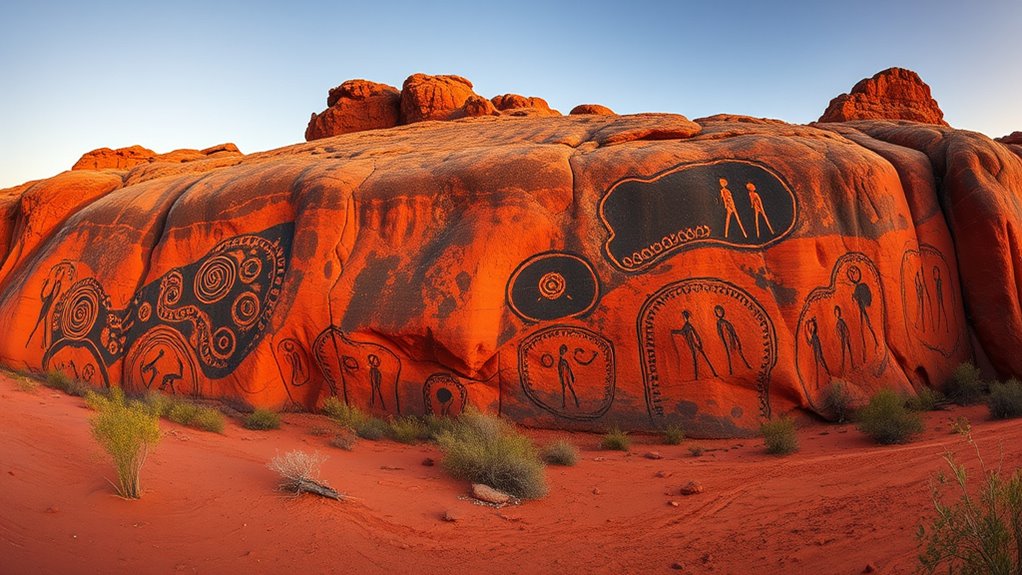

Dreamtime stories are sacred narratives that explain how the world, land, animals, and humans came to be. They reveal the deep spiritual bond between Aboriginal people and nature, often featuring mythological creatures like the Rainbow Serpent that symbolize life and morality. These stories are expressed through intricate art, continuing traditions and cultural lessons. Exploring these stories offers you a new perspective on land and life, and if you look closer, you’ll discover even more profound meanings.

Prime made for students and young adults
- Fast, free delivery for dorm and study essentials
- Prime Video and Amazon Music included
- Member-only deals
Key Takeaways
- Dreamtime stories explain the world’s origin, land formations, and natural features through mythological creatures and ancestral beings.
- They serve as spiritual guides, teaching morals, respect for nature, and cultural values within Aboriginal communities.
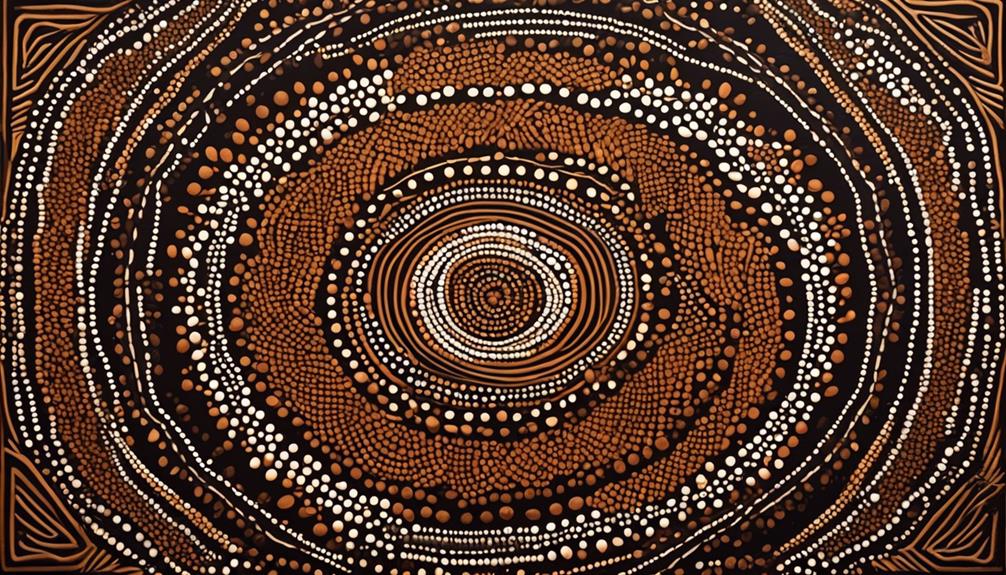
- Art depicts these narratives using symbols, patterns, and visual elements that encode and transmit ancestral knowledge.
- Myths often feature creatures like the Rainbow Serpent, representing life force, fertility, and natural forces.
- Understanding these stories offers insight into Aboriginal worldview, emphasizing harmony between people, spirits, and the land.
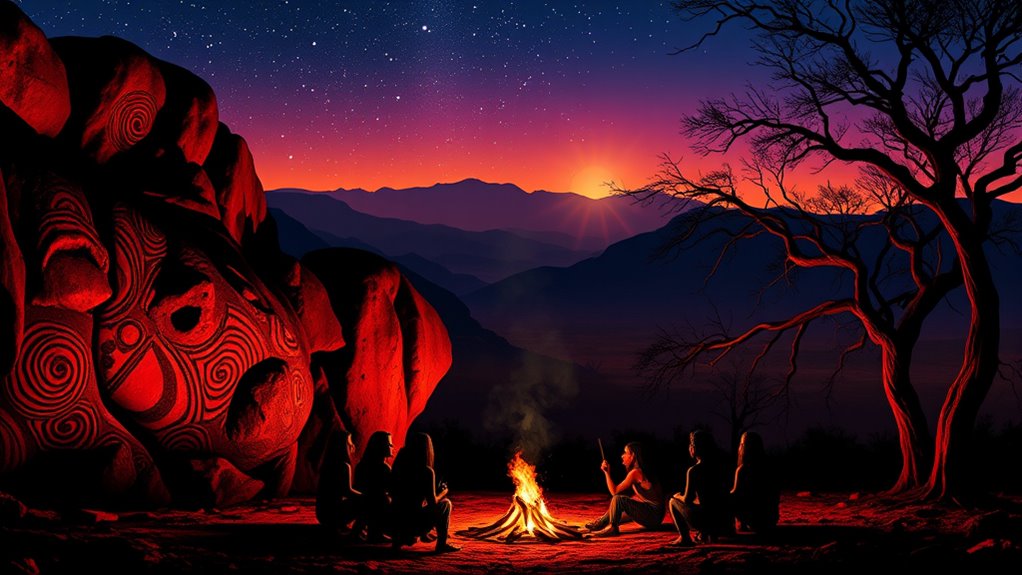
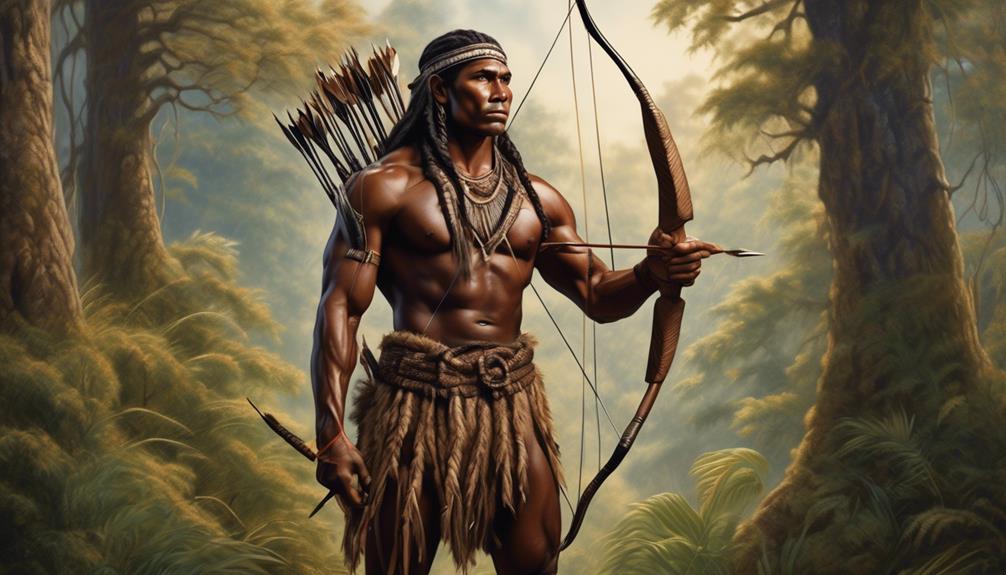
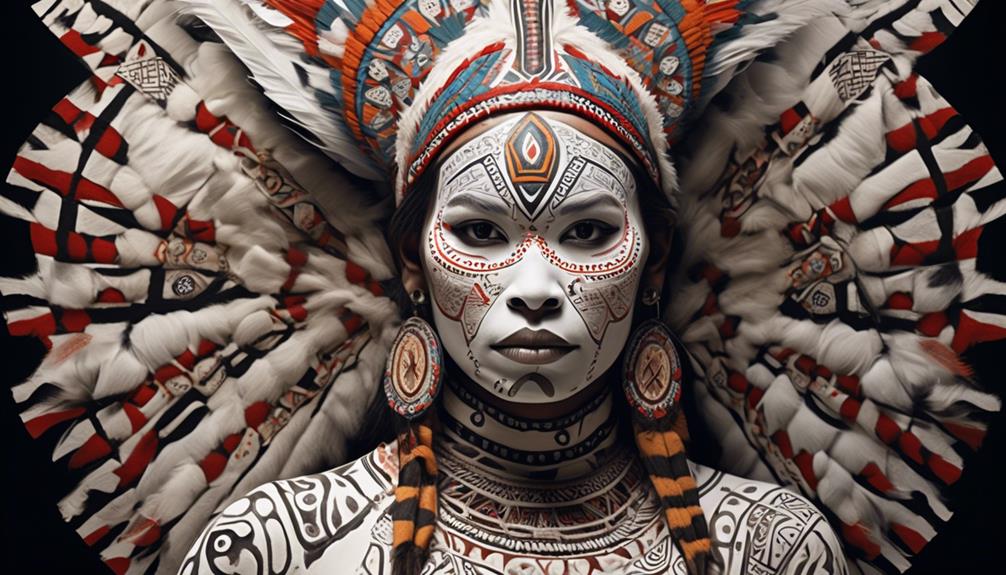
Dreamtime stories are the sacred narratives that explain how the world and its features came into existence. They are central to Aboriginal culture, serving as both spiritual guides and explanations for the landscape around you. These stories are deeply embedded in everyday life, shaping your understanding of the land, animals, and your place within the universe. When you explore these stories, you’ll notice that they are often expressed through intricate aboriginal art, which visually captures the mythological creatures and ancestral beings important to these narratives. These artworks aren’t just decorative; they are living stories that connect you to your ancestors and the Dreamtime itself. Unique cultural experiences are often woven into these stories, emphasizing their significance beyond mere storytelling. In these stories, mythological creatures play a essential role. They are often depicted as ancestral beings who shaped the land, created rivers, mountains, and animals, and established the laws by which humans live. You might hear about creatures such as the Rainbow Serpent, a powerful symbol of fertility and life force, or other mythological beings that embody natural elements and phenomena. These creatures aren’t just stories; they represent forces of nature and moral lessons, guiding how you should behave and respect the environment. Aboriginal art vividly depicts these mythological creatures, using symbols and patterns that encode the stories, allowing you to pass down knowledge through generations. When you see the swirling lines or dots in traditional art, you’re witnessing a visual language that connects you directly to these ancestral beings and their stories. Understanding Dreamtime stories helps you see the world through a different lens—one that sees the land as alive with spirit and history. You realize that every feature of the landscape has a story, a myth, and a moral behind it. These stories often teach lessons about harmony, respect, and the importance of maintaining balance with nature. As you explore aboriginal art, you’ll notice how these stories are woven into every brushstroke, every symbol, making the artwork a sacred act of storytelling. The mythological creatures depicted in these artworks remind you of the ongoing relationship between the land, the spirits, and your community. Embracing these stories allows you to understand the profound connection Aboriginal people have with their environment and their spiritual ancestors, ensuring that these traditions continue to thrive through storytelling, art, and cultural practices.
As an affiliate, we earn on qualifying purchases.
Frequently Asked Questions
How Do Dreamtime Stories Vary Among Different Indigenous Groups?
You’ll notice that dreamtime stories vary among indigenous groups due to regional variations and unique storytelling techniques. Each group adapts the narratives to reflect their environment, culture, and history, often emphasizing different spirits or creation events. These stories are passed down through oral traditions, with storytelling techniques that include song, dance, and symbolism, making each group’s version distinct and rich with local meaning.
What Symbols Are Commonly Used in Dreamtime Narratives?
You’ll find that Dreamtime symbols are powerful tools in Indigenous iconography, with over 20,000 variations across Australia. Common symbols include serpent figures representing water and fertility, and concentric circles symbolizing waterholes or meeting places. These symbols convey complex stories and spiritual beliefs, helping you connect with ancestral spirits and the land. Recognizing these symbols deepens your understanding of Indigenous culture and the rich traditions embedded in Dreamtime narratives.
Are Dreamtime Stories Passed Down Orally or Written?
You learn that Dreamtime stories are primarily passed down through oral traditions, relying on storytelling methods like spoken word, songs, and ceremonies. These stories are transmitted from generation to generation without written records, emphasizing the importance of memorization and performance. By engaging in these oral traditions, you help preserve the cultural heritage and spiritual beliefs embedded in the stories, ensuring they remain alive and meaningful within the community.
How Do Dreamtime Stories Influence Contemporary Indigenous Culture?
Dreamtime storytelling deeply shapes your contemporary Indigenous culture, driving cultural preservation and pride. You see ancestral stories in art, dance, and ceremonies, reinforcing identity and connection to land. These narratives influence your values, laws, and traditions, ensuring they’re passed down through generations. By embracing dreamtime storytelling, you maintain cultural continuity, celebrate heritage, and foster community cohesion, keeping ancient wisdom alive in modern times.
What Ethical Considerations Are Involved in Sharing Dreamtime Stories?
When sharing Dreamtime stories, you must prioritize cultural sensitivity and respect for story ownership. Always seek permission from Indigenous elders or community members before sharing these narratives, as they hold deep spiritual significance. Avoid misrepresenting or altering stories, and recognize that these stories belong to specific cultures. By doing so, you honor their traditions, preserve their cultural integrity, and foster respectful cross-cultural understanding.
Conclusion
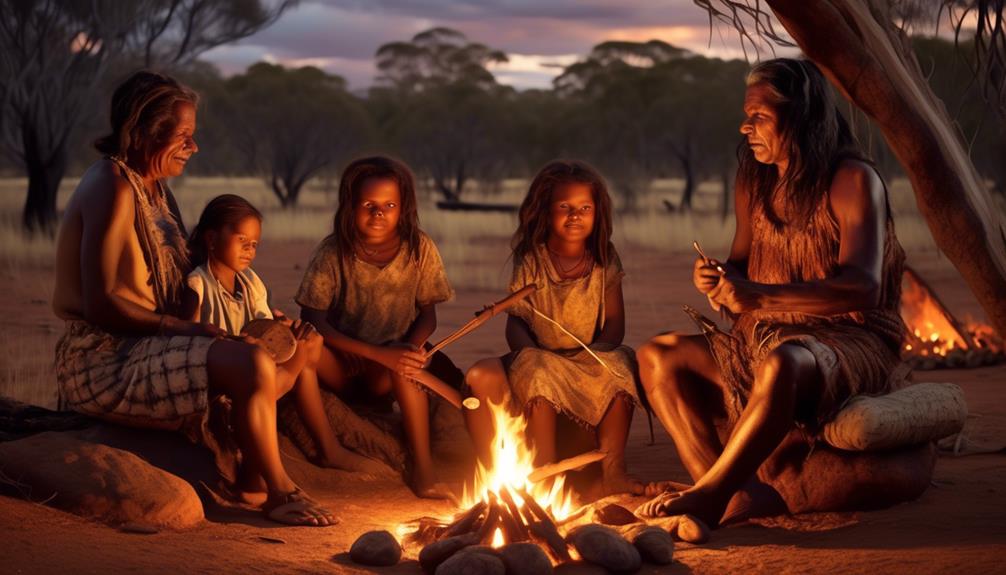
As you explore Dreamtime stories, you begin to see how they’re like intricate webs, connecting every part of the land and its people. Imagine a young Aboriginal storyteller, weaving tales under the stars, each story a thread binding generations together. These stories aren’t just ancient legends—they’re the roots of identity and harmony. By understanding them, you see how the universe was spun from dreams, shaping the world you walk through every day.
Halloween Picks
halloween
As an affiliate, we earn on qualifying purchases.