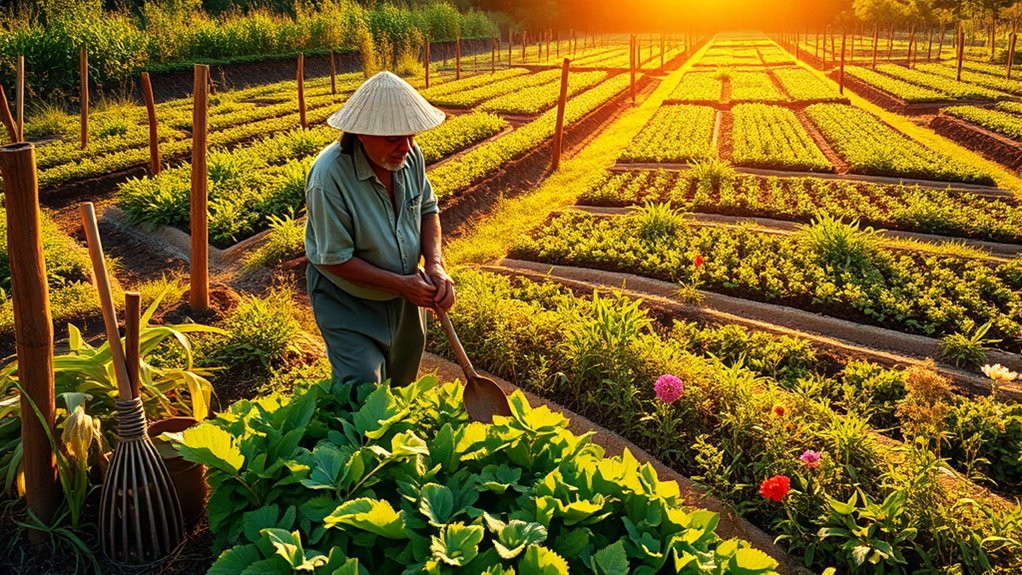

Traditional ecological knowledge integrates ancient practices with modern farming to boost sustainability and resilience. By working with nature, you can adopt methods like agroforestry and soil conservation techniques that support biodiversity, improve soil health, and prevent erosion. These time-tested strategies help create environmentally friendly systems that are adaptable and culturally respectful. Embracing this knowledge allows you to build a harmonious relationship with the land—discover how these practices continue to shape resilient farms today.
Play games included with Prime
Start a Prime free trial and play with Amazon Luna on your devices.
As an affiliate, we earn on qualifying purchases.
Key Takeaways
- Integrating traditional ecological knowledge (TEK) enhances sustainable land management and promotes environmentally friendly farming practices.
- TEK informs agroforestry methods that improve biodiversity, soil health, and ecosystem resilience in modern agriculture.
- Applying soil conservation techniques from TEK helps prevent erosion, retain water, and reduce chemical dependency.
- Combining indigenous wisdom with scientific research fosters innovative, culturally respectful, and sustainable farming solutions.
- Utilizing TEK supports climate resilience and land stewardship, ensuring long-term productivity and ecological balance.
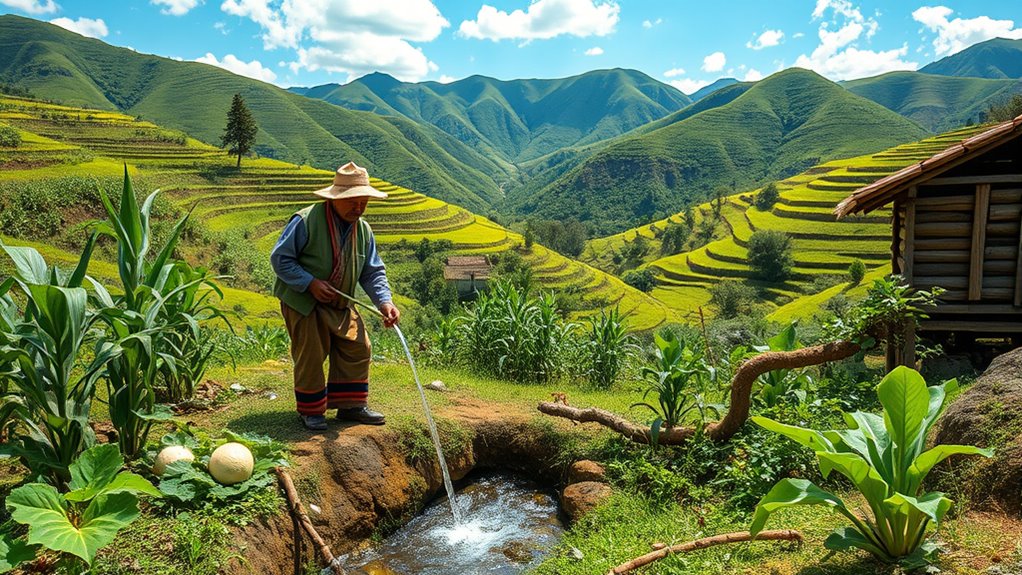
Have you ever wondered how indigenous communities have managed to sustainably coexist with their environment for generations? These communities often rely on traditional ecological knowledge, which encompasses practices honed over centuries to maintain the health of ecosystems. Modern farmers can learn a lot from these time-tested methods, especially when it comes to sustainable land management. For example, agroforestry practices—integrating trees with crops—are a cornerstone of indigenous land use. By planting trees alongside crops, they create a microclimate that reduces soil erosion, enhances biodiversity, and improves crop yields. This approach not only provides shade and windbreaks but also fosters a balanced ecosystem where different species support each other. As you incorporate agroforestry practices, you’re mimicking natural processes that have proven effective in maintaining soil fertility and preventing land degradation.
In addition to agroforestry, soil conservation techniques are essential elements of traditional ecological knowledge. Indigenous communities have developed methods to protect and restore soil health, recognizing that healthy soil is the foundation of productive land. Techniques such as contour planting, cover cropping, and minimal tillage help prevent erosion and improve water retention. These methods are simple yet powerful, often based on observations of how the land responds to different interventions over time. By adopting these soil conservation techniques, you can reduce dependency on chemical inputs, preserve soil structure, and boost long-term productivity. These practices also contribute to climate resilience, as healthier soils store more carbon and retain water better during droughts.
What makes these practices especially valuable today is their rootedness in a holistic understanding of the environment. Indigenous knowledge emphasizes working with nature rather than against it, promoting practices that are both sustainable and adaptable. When you integrate traditional ecological knowledge into modern farming, you’re not only improving land stewardship but also supporting biodiversity and ecosystem services. This approach encourages you to view the farm as a living system where every element has a role to play. Whether it’s planting trees strategically or implementing soil conservation techniques, these methods foster resilience and sustainability.
Ultimately, respecting and applying traditional ecological knowledge bridges the gap between ancient wisdom and modern science. It provides practical solutions that are environmentally sound, culturally respectful, and economically viable. As you explore these practices, you’ll find that they offer a way to farm more sustainably—preserving the land for future generations while meeting current needs. By embracing agroforestry practices and soil conservation techniques rooted in indigenous knowledge, you can create a more resilient and harmonious relationship with the environment.
As an affiliate, we earn on qualifying purchases.
Frequently Asked Questions
How Can TEK Be Integrated Into Mainstream Agricultural Policies?
You can integrate TEK into mainstream agricultural policies by promoting indigenous innovation and involving indigenous communities in policy development. This approach guarantees their knowledge is respected and applied effectively. Governments should create platforms for dialogue, incorporate TEK into research and innovation, and prioritize policy integration that values traditional practices. By doing so, you foster sustainable farming methods that benefit both communities and the environment.
What Challenges Face the Documentation of Traditional Ecological Knowledge?
You face challenges in documenting Traditional Ecological Knowledge because it’s often passed orally, risking loss over generations—studies show up to 70% of indigenous knowledge isn’t recorded. This hampers cultural preservation and Knowledge transfer. Additionally, language barriers, mistrust, and intellectual property concerns make it hard to accurately capture and respect this knowledge. Overcoming these hurdles requires building trust and creating respectful, inclusive documentation processes.
How Does TEK Influence Biodiversity Conservation in Farming?
You see that Indigenous practices, rooted in Traditional Ecological Knowledge, substantially influence biodiversity conservation in farming. By using sustainable methods, crop diversity, and natural resource management, these practices promote biodiversity preservation. You help support ecosystems, reduce reliance on chemical inputs, and maintain resilient landscapes. Embracing Indigenous wisdom can lead to more sustainable, eco-friendly farming that benefits both the environment and local communities, ensuring biodiversity thrives for future generations.
Can TEK Be Adapted to Climate Change Mitigation Strategies?
You can adapt TEK to climate change mitigation by embracing indigenous resilience and cultural preservation, which offer valuable insights. By integrating local wisdom into modern strategies, you foster sustainable practices that nurture the land and communities. This approach enhances biodiversity, increases adaptability, and strengthens cultural ties, creating a harmonious balance. Such adaptation not only respects indigenous contributions but also enriches our collective effort to tackle climate change effectively.
What Are Examples of Successful TEK Applications in Modern Agriculture?
You can see successful Indigenous farming examples like the use of crop rotation and intercropping, which promote soil health and pest control. Many farmers adopt sustainable practices rooted in traditional ecological knowledge, such as water conservation techniques and seasonal planting cycles. These methods help improve crop yields and maintain environmental balance, demonstrating how Indigenous farming practices are effectively integrated into modern agriculture to create more resilient and sustainable systems.
Conclusion
You might think modern farming has all the answers, but often, it’s traditional ecological knowledge that holds the real wisdom. Ironically, in chasing high yields, we’ve overlooked centuries of sustainable practices that could actually benefit our environment. By embracing ancient insights, you could find a smarter, more resilient way to farm—yet, it seems we’re too busy ignoring what’s been proven effective for generations. Sometimes, the old ways really are the best, if only we’d listen.
Fall Picks
fall essentials
As an affiliate, we earn on qualifying purchases.